Dear reader,
It is ill-advised to dance in the jungles of Nicaragua under moonlight without wearing bug spray. I learned this lesson in the way that you are imagining. Although I know that it would be impossible to pinpoint the exact point I was bitten by the disease carrying mosquito that would end up derailing my travel plans, I can only assume this was the moment. Plus, it feels more poetic this way.
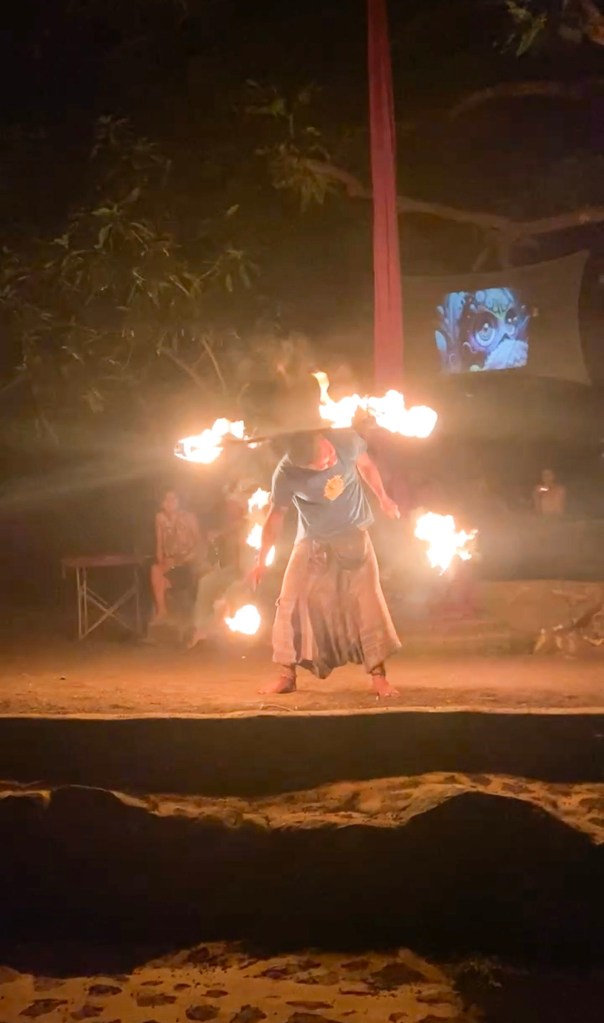
I was feeling quite light and free as I swayed to a drumfilled techno beat with mostly strangers on Ometepe Island-the “hippiest” place I have ever been throughout my travels. I had found myself there a bit unexpectedly, and the mosquitoes had found me too. This was one of my last nights in Nicaragua, and I certainly made a memory of it-entranced by the fire-spinning, banging drums and the backdrop of jungle and night.
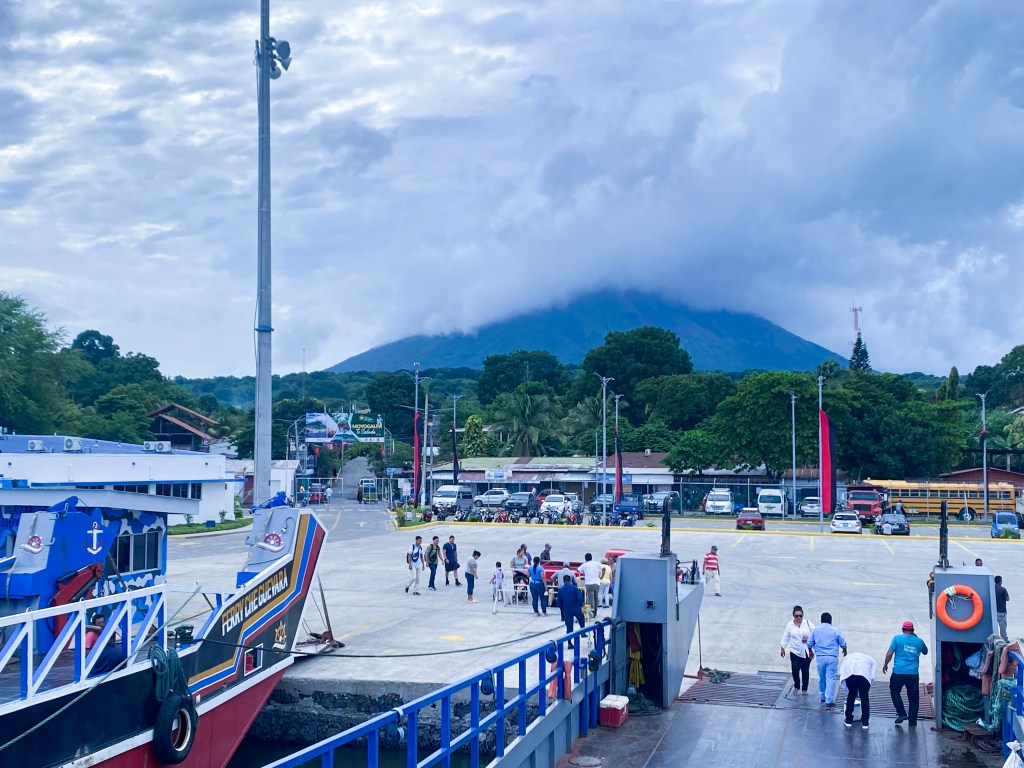
Soon after I traveled back to León and settled into the semi-familiarity of the town that was both my first and last stop in Nicaragua. Here I would be picked up for a 20ish hour overland journey to Antigua, Guatemala.
During this ride, I began to die.
Okay, I am being dramatic. But an illness rivaling the pain I felt when I contracted COVID was definitely starting to set in. I was sweating and feverish, and self-medicated with dramamine (not sponsored) in order to sleep most of the journey. I had dreams of rocking in a boat as our van snaked its way through El Salvador and Honduras. My fitful fever dreams were punctuated by immigration checkpoints and gas station breaks where guards stood at the doors with large guns in hand. Even my American heart was a bit rattled.
I began to feel worse and worse throughout the journey. I awoke from one of my naps to the sight of a blockade: vehicles and people blocking the path ahead. I could see the tell-tale signs of a protest with makeshift signs waving in the air. Our driver turned his head and informed us that we would have to exit the van and walk to our next bus. At first I was nervous, admittedly partly because of the statistics I have heard about Honduras, which in a not super far history had a reputation for violence, particularly against women.
I struggled to keep up with my group. Dragging myself along the way in the back as I felt weak under what should have been the familiar weight of my backpack. The scene was a bit of blur, surrounded on all sides by people chanting and waving their signs sporadically. I began to read some of the signs held up by the protesters and I realized, as they almost always are, that the protesters were definitely in the right in this situation. I felt proud to witness their efforts and solidarity. It had been merely two days since the (alleged) rigged results of the Venezuelan presidential election that let Nicolás Maduro keep his seat. Their allies in Honduras were voicing their outrage, and their support of the Venezuelan people.
My group was so far ahead that they left my line of sight as I was struggling to make my way through the throng of people. I strained to look up for my group fearing I would potentially be left to fend myself in the middle of this massive protest – and I fell straight down to the ground. The skin of my knees bursted with blood as two local men, one protester and one uniformed police officer exclaimed and rushed to help me on my feet. Embarrassed yet grateful, I thanked them quickly and began a pathetic jog to ensure I was not further left behind. Miraculously, I made it to the bus, and this short yet somehow impactful leg of the journey was over. At around 3:00am, a little more than 24 hours from when I had first left León, I had finally made it to Antigua.
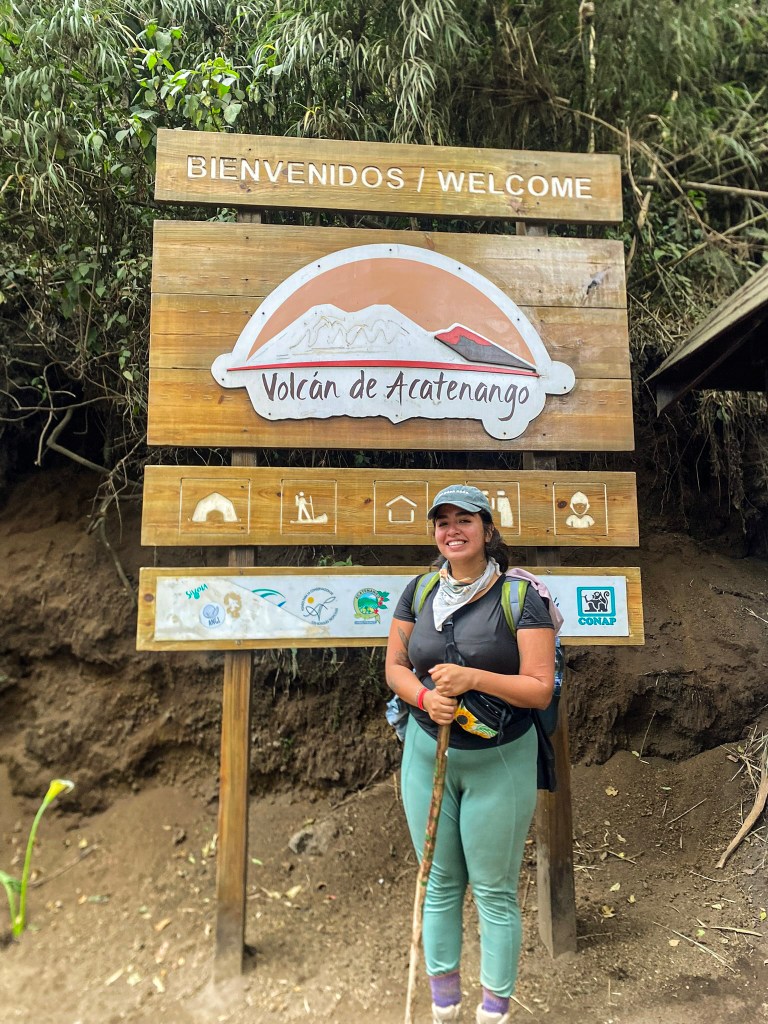
Guatemala had been on my dream board for years at this point, and was one of the driving forces leading me to Central America for one main reason: I dreamed of watching the flames burst from Fuego while hiking Acatanago volcano. For almost a year I crashed on my mom’s couch and waited tables in order to make this dream a reality, and now here I was.
And I didn’t leave my bed for six days.
What began as a sickness I thought I could sleep off became worrying after violently throwing up in the middle of the night in a shared bathroom inside my hostel dorm. I ordered an uber and went to the hospital at midnight but there was no doctor, so I simply slept in the examination room because I was too ill to leave and waited for him to arrive at 7am. I went to the hospital a total of three times and when I finally got my dengue diagnosis I had to wander the streets on foot looking for a pharmacy to fulfill my prescriptions. I was surviving off electrolytes and the occasional bite of jello. My body ached like nothing I had felt before, and I understood in excruciating detail why dengue is called “breakbone fever.”
When I left the USA I told everyone I didn’t know exactly when I would be back. “Expect me back in maybe five or six months.” Now, after about two and a half months I booked a last minute flight back to the US. Sick, defeated, and reeking of failure but a little relieved to have my parents take care of me.
As what tends to happen, I ended up staying home for longer than intended. It would be about five months before I left again, despite recovering from my little stint of dengue after about 10 days. It would be about 8 months before I was back in Guatemala to redeem myself and face Acatenango.
And I almost died again.
Acatenago immediately showcases its difficulty to you even in the first few steps. The path is pure dust and dirt and heads straight up at an angle that is almost rude. Not even ten minutes into the journey someone in my tour group already unceremoniously bowed out, turning on their heels and leaving.
The dusty path leads you up and up and up and on my right side we passed farm land, which would quickly give way to forest. The landscape was constantly changing.
I pushed the fact that viewing Fuego erupting was nowhere near a guarantee to the back of my mind. It was dependent entirely on the weather, and a recent massive explosion had caused an evacuation of the volcano and surrounding area actually had a stalling effect on the volcanic activity – as if it had been depleted. Even if I didn’t end up seeing an eruption, the trek was an experience in itself.
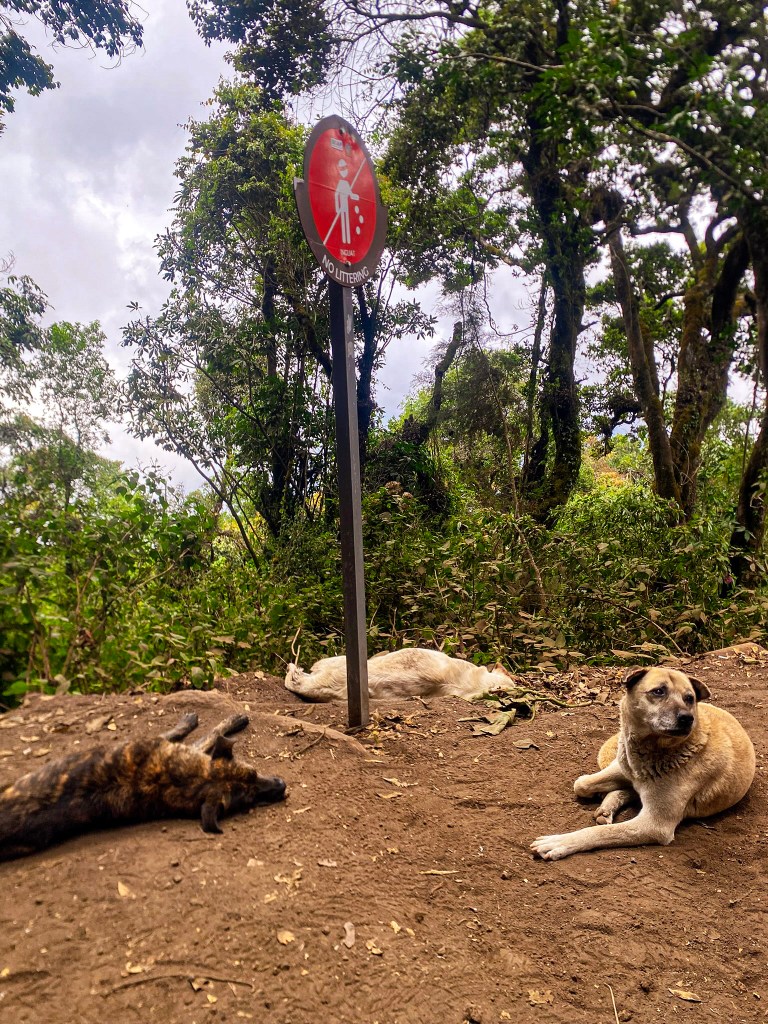
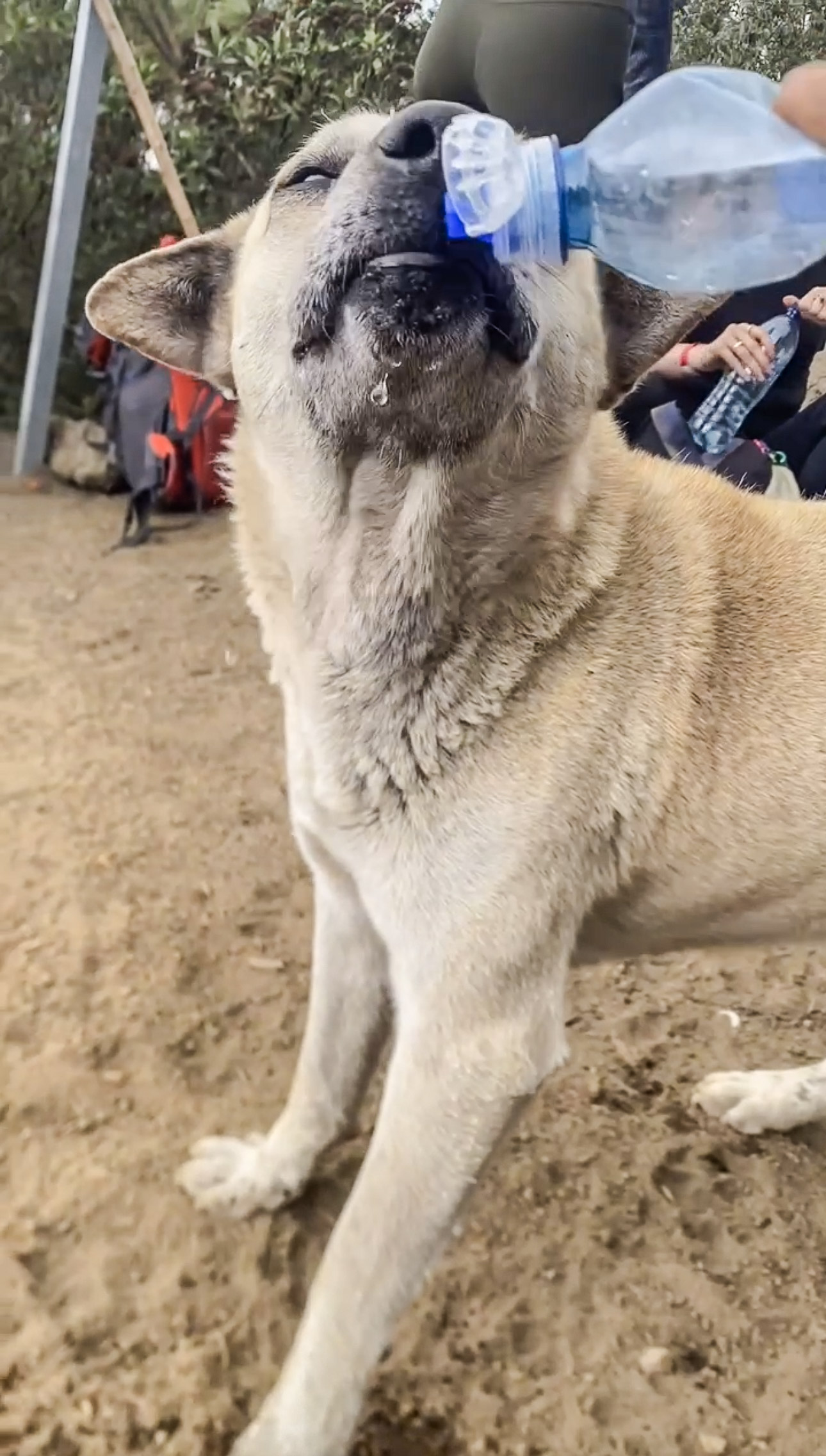
I fell in line with a couple of the mountaineering dogs (as I called them) who were born on the volcano and followed hikers up and down for the chance at food, water, and affection. I had never seen anything quite like the athleticism of these dogs. I asked one of my tour guides about them, and they said there were a lot of dogs on the volcano, and only the strongest survived. I’ll spare you, dear reader, the worst of the details but truely, this is a dog-eat-dog-world.
I was, of course, aware of the difficulty of hiking Acatenango. And in the not so distant past I did have to bail 10 days into what was meant to be a month-long hike through the high Sierras mountains of California due to altitude sickness. I think this failure, witnessed by all who knew me, was also a driving point to get my ass back to Guatemala and up this volcano. There are some failures in life that we can never really redeem ourselves from: failed relationships, friendships falling apart, the wrong words spoken at the wrong time, and time that we can never take back. When I exited the Sierras, tail between my legs, a kind older woman I dubbed “trail mom” , who was completing the 211 mile hike for the fifth time told me “the mountain will always be there.” But after the major explosion on Fuego in early 2025 that caused the evacuation of Acatenango, and rumors of the volcano being inaccessible for good, I thought that volcanos played by much different rules than mountains.
As you near base camp on the hike you face the open world on your right side. The trail had changed from dust, dirt, farmland, forest, to something meadow like, filled with flowers and greenery. Then the earth under your feet turns grey and black. A mist sets in and you’re walking through a cloud, following the brightly colored jackets of your fellow expeditioners.
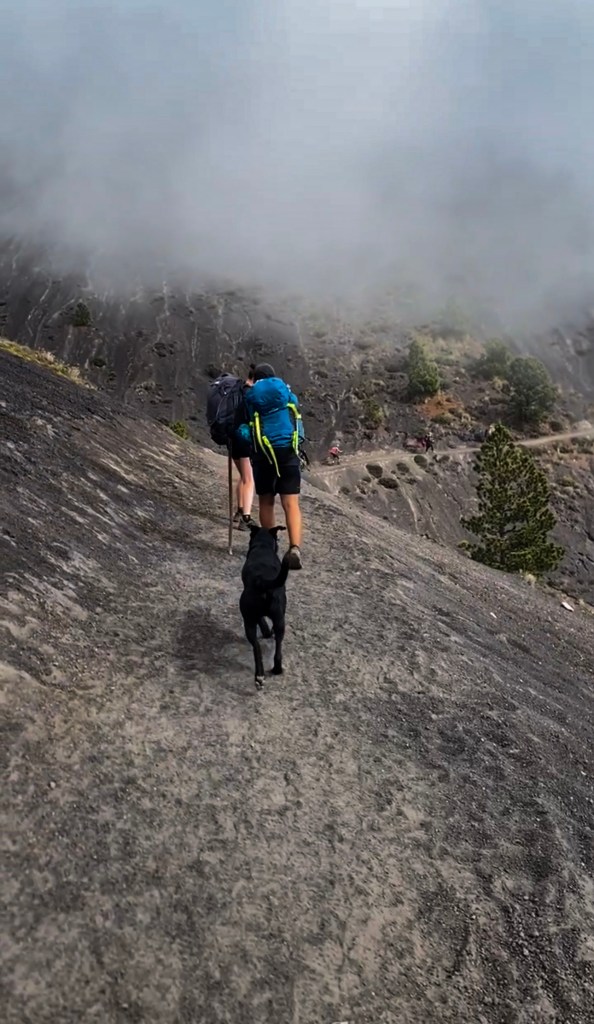
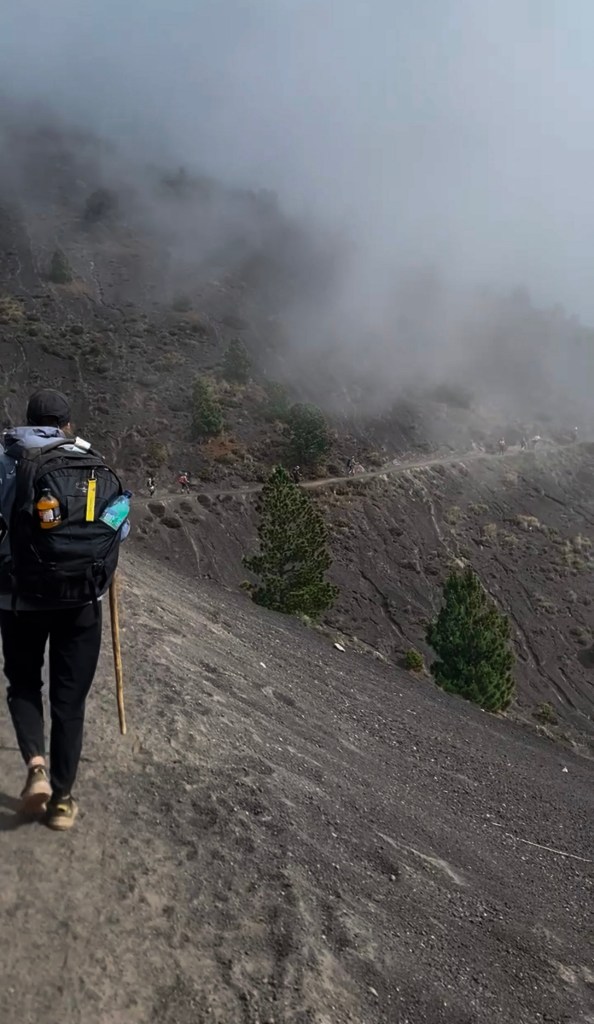
We made it to base camp, a series of cabins on the side of the mountain and we are above the clouds, making the world feel both huge yet oddly accessible at the same time. Straight ahead is the first full view of Fuego, and she is rather magnificent.
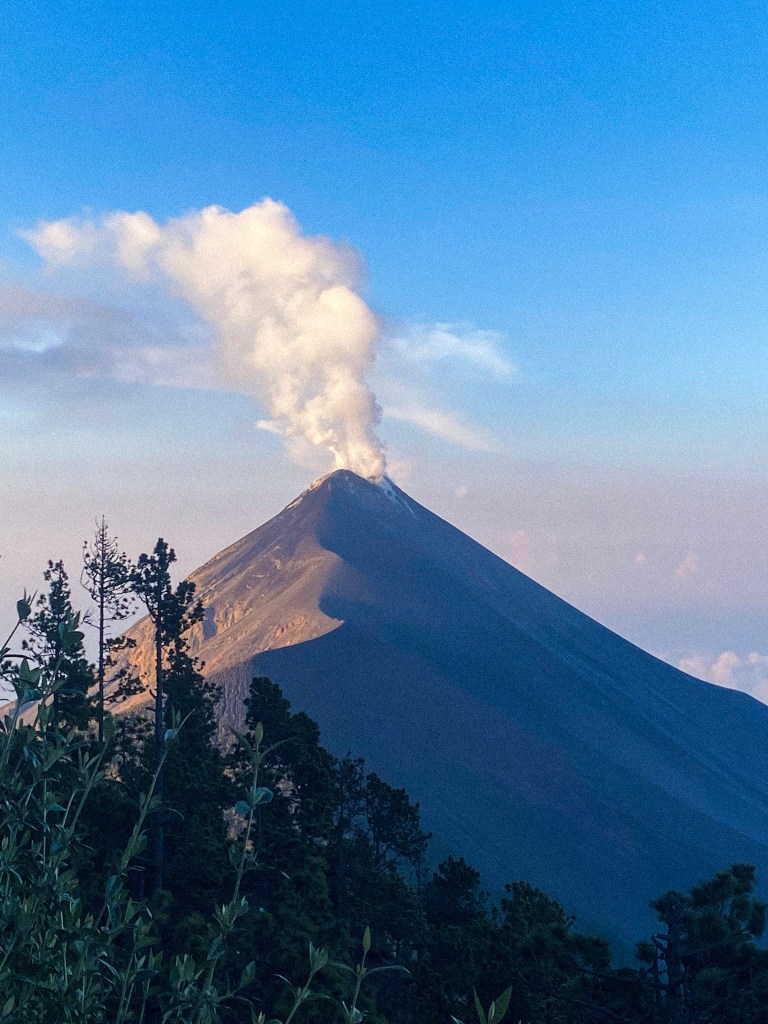
The Fuego saddle hike, an optional add-on to the already grueling efforts made in the first ascent is notoriously difficult due to the altitude, added onto the fact that you also just hiked up a damn volcano. For these reasons, I had already made up my mind to not participate. Being at base camp was enough. I would save my energy for the sunrise hike.
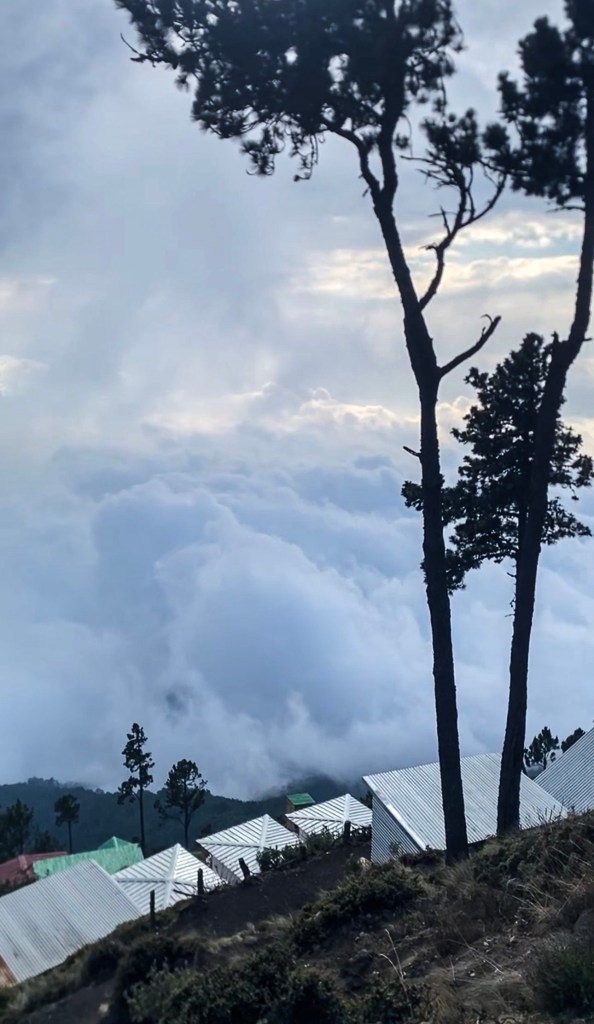
At the very last possible moment, I changed my mind.
This second hike was certainly unforgettable, I had never hiked above the clouds like that, and as the sun began to set and I looked at what was around me I felt as though heaven itself had descended upon me, beautiful enough to make my agnostic self think these divinity-like thoughts.
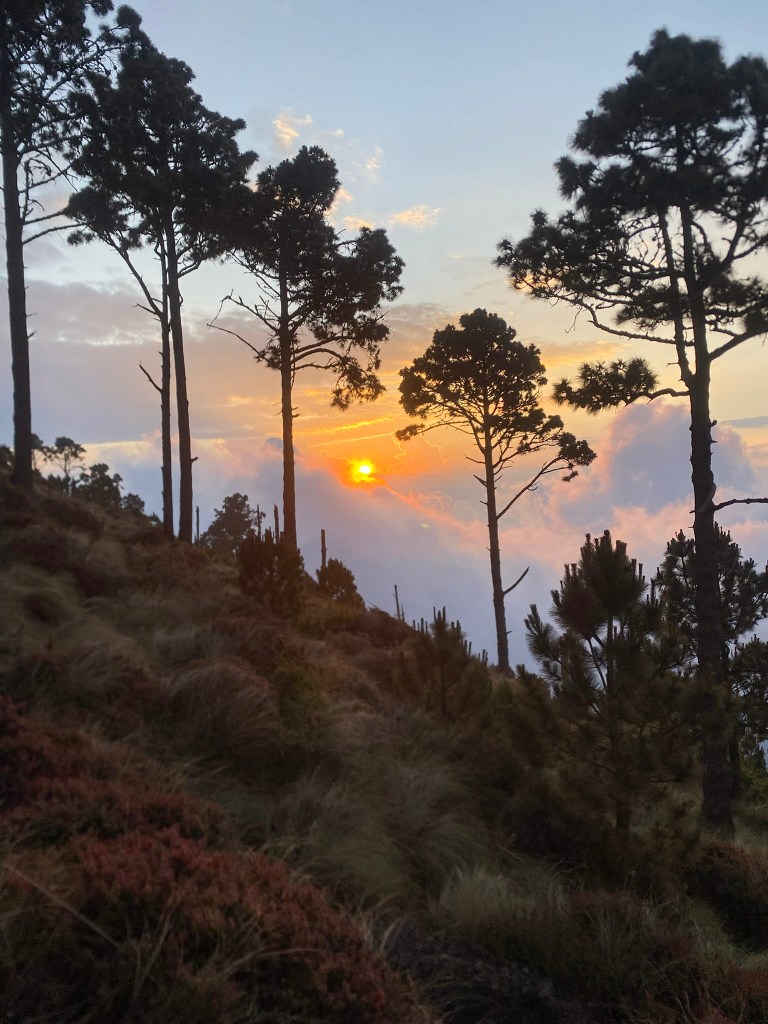
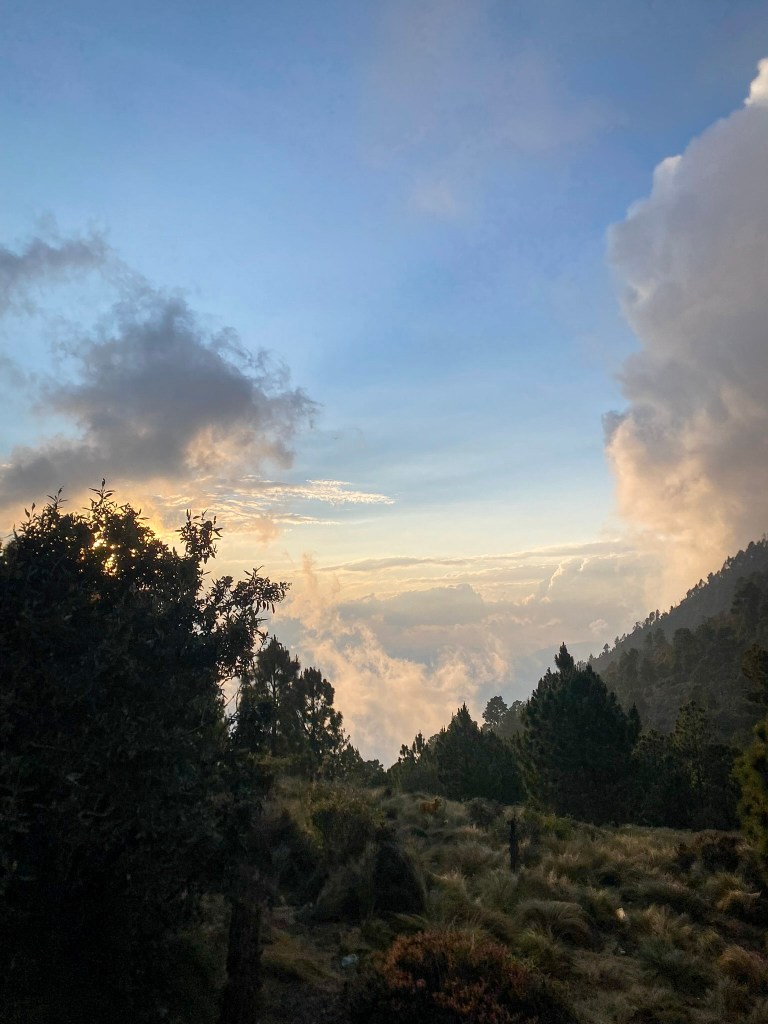
The sun set at the moment where we most needed light. The path to Fuego’s saddle became more treacherous and I found myself, once again, in the back of our group. One poor tour guide, or mochilero, from my group had to stick with me as best as possible, though his form of encouragement devolved into light teasing, which I must admit is not my more desired form of motivation.
At one point I even lost him too. It was incredibly dark and I could feel the vastness opening up on either side of the volcanic landscape I was on, stepping carefully in the dark. Rows of headlamps lit my way and I felt for a moment like I was in one of those low budget expedition-disaster movies my parents like to watch.
Finally, I made it to the saddle and was greeted by: fog. Clouds. Next to zero visibility. Valor la pena? Honestly, I don’t know.
I sat down next to a newfound friend I made on the trek. Looking out into nothing, sitting in the dirt and huddling into our jackets to protect us from the piercing cold winds, what else was there to do but laugh? Our laughter was met with an earth-shattering BOOM like I have never heard before, and the large gusts of wind that were battering down on us parted the fog for a few seconds and we could just make out the full shape of Fuego-plums of smoke escaping from its gaping mouth. The BOOM was undoubtedly an eruption. No sight of the coveted lava that everyone had come to witness for themselves, because when and where else would we be able to watch an active volcano erupt?
The journey back down the Fuego saddle and consequently back up to our base camp is where I began to contemplate the logistics of simply sleeping amongst the shrubbery. Despite the cold, despite everything, I was nearly ready to give myself to nature. As you can guess I found myself, again, in the back. The very back. My poor mochilero was encouraging me, and literally pushing me along as I felt short of breath. I fell so far behind that we ended up having to join an entirely different tour group who were also lagging behind their guides. My mochilero (for I had to claim him now for how much time he had to spend with me) vowing to now guide us all.
I was given periodic sips of coca-cola in efforts to revive me. At some point I was no longer holding my things, which consisted only of a fanny pack and a waterbottle, because apparently even this was holding me down. Perhaps my months spent indulging in pan dulce and various other goodies in the streets of Mexico was getting to me. Perhaps it was my recently formed habit of drinking beer and smoking cigarettes, an inevitable byproduct of traveling though Mexico with three British 20-somethings. Whatever it was, I was losing the battle with Acatenango, and once again, I had an audience.
Dizzy, tired, and past the point of regret, I was jolted by the sound of exciting screaming ringing out in the night. I turned my gaze behind me towards Fuego, and sure enough there it was, what we had waited for out in the cold: lava.
My first thought was: ah, at last a valid excuse for an extended period of staying still. I moved closer to the others to a small clearing, cheering at the sight of lava in the distance. Although likely not as impressive of a sight that others may have had watching the eruption from Fuego’s saddle, it still felt surreal. Once I finally caught enough breath to fully enjoy the moment, the regret that was creeping up was replaced by something else. I felt incredibly lucky.
Plenty of hikers hike Acatenago and see absolutely nothing, and plenty of people, local Guatemalans included, never get the chance to visit this place. How much of the world has seen what I was witnessing? Throughout my travels I often confront how unfair the world can be depending on circumstances outside of our control.
The first time I left Guatemala I felt disappointed in myself. I had worked so hard to visit this place that I literally dreamed of, only to end up going home without getting any sense of where I was. Months later, after sacrificing again and again-sleeping on my mom’s couch, going back to waitressing to make quick cash despite having a degree and years of work experience, spending months feeling like I was buffering because my bucket list felt more important to me than any invisible adult markers that were passing me by.
I may have failed at many things in life, and I will probably fail some more, but I reminded myself that I can always try again. I conquered Acatenango. A lesson in returning. A lesson that it is okay to try again if you feel so inclined, but it is also okay to leave things be if they no longer call to you.
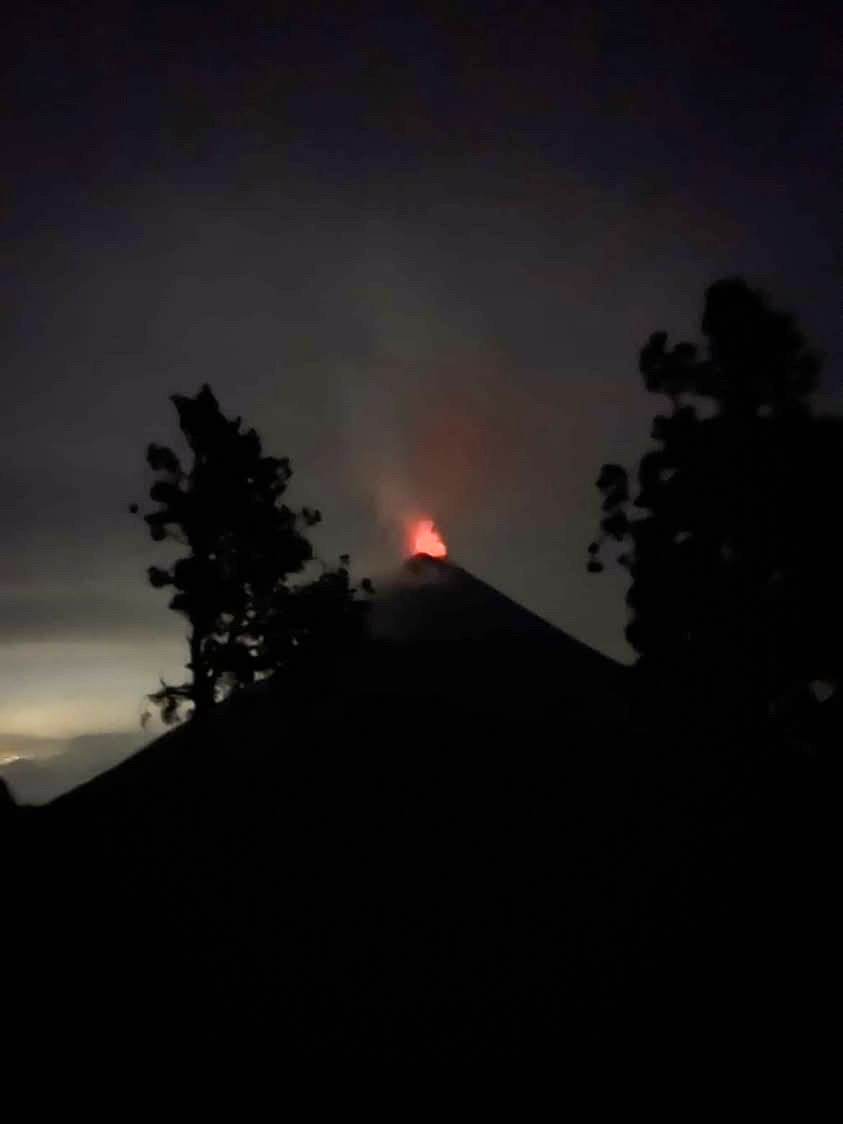
We made it back to base camp long after everyone else had already eaten dinner and gone to bed. I ate my beans and drank my hot chocolate almost begrudgingly, because although I was hungry, I was more tired. I laid down for a fitful sleep where I was never quite warm. I did not join the sunrise hike.
I had seen plenty of videos of people ascending Acatengago, the next morning I learned why there is significantly less documentation of going back down. One does not climb down Acatenango. You have to run down Acatenango. The terrain is so slippery and steep that anything less than running and occasionally digging your heels into the dirt will result in slipping, sliding, and falling. There’s less footage of this leg of the adventure because the descent requires speed and full focus-and you need both hands to stabilize.
Once I made it down and the dirt under my feet faded to the gravel of the street, I felt like a sailor finding land after an extended period at sea, and wanted to kiss the very ground. I sat on the bus in a bit of haze, the past twenty-four hours feeling like a blur.
Arriving back in Antigua everyone parted ways, and I had to begin another hike of sorts. While everyone else got dropped off near their accommodations in the city center, I had chosen to stay in the outskirts, truly resigning myself to the broke backpacker lifestyle by choosing the $6 hostel that came with the added adventure bonus points of avoiding a particularly rowdy pack of dogs. On my walk back I stepped into a pizza restaurant that advertised iced coffee which was desperately needed, and I had what might have been the best donut I’ve ever had in my entire life. Antigua was full of surprises like that. I could not immediately relax upon successfully returning to the hostel because I was heading to the next leg of my journey that same day: the notorious Lake Atitlán.
The first time I left Antigua I was hurting from dengue, feeling light-headed, feverous, with an ache in my hips, arms, and legs that I had never quite felt before. This time I left Antigua also in a bit of pain, sore, tired, but a little bit vindicated. Turns out failure and success are not so linear, and I can indeed do hard things even, even if I do them poorly.
Sincerely,
Lili


 Elsewhere Letters
Leave a comment